

Key Considerations in Ground Preparation and Backfilling Works
Ground preparation and backfilling works play an important role in ensuring the safety, durability, and long-term performance of residential, industrial, road construction, and infrastructure projects. Assessing existing ground conditions, selecting appropriate backfill materials, and carrying out operations in accordance with project requirements contribute to creating a stable and durable foundation.
In professional backfilling operations, ground characteristics, material quality, compaction methods, and drainage conditions must be evaluated together. Planned and controlled operations help reduce potential settlement and ground-related problems during subsequent construction stages.
What Is Ground Preparation and Why Is It Important?
Ground preparation refers to a series of operations carried out to make a construction or infrastructure site suitable for the technical requirements of a project.
During this process, existing ground conditions are assessed, necessary excavation and grading operations are planned, and backfilling applications are carried out according to project specifications.
Proper ground preparation supports the load-bearing performance of structures and paved surfaces while contributing to more efficient execution of subsequent construction stages.
How Are Backfilling Works Carried Out?
Backfilling operations are performed through specific stages determined by existing site conditions and project requirements.
Ground Assessment: The load-bearing characteristics, moisture conditions, and other technical properties of the existing ground are evaluated.
Site Preparation: Unsuitable surface materials are removed, and the working area is prepared for backfilling.
Backfill Material Selection: Materials suitable for project specifications and ground conditions are selected.
Layered Backfilling: Backfill materials are placed in layers according to the thickness requirements specified in the project.
Ground Compaction: The placed materials are compacted using appropriate equipment under suitable moisture conditions.
Inspection and Grading: The completed works are checked for compliance with project elevations and compaction requirements.
What Should Be Considered When Selecting Backfill Materials?
Materials used in backfilling operations must be selected according to the intended application and technical requirements.
Crushed stone aggregates, gravel, graded aggregate materials, and other suitable backfill materials are evaluated based on particle size distribution, fines content, strength, and compaction characteristics.
For example, materials used in road base and subbase construction must comply with relevant technical specifications. In industrial and construction site backfilling applications, ground load-bearing requirements and operating conditions must also be considered.
Material suitability should not be determined solely by particle size or appearance. Laboratory testing and technical inspections should be conducted when required.
The Importance of Ground Compaction
Ground compaction is the process of reducing voids between soil or backfill particles to achieve the density required by the project.
Proper compaction helps improve ground performance and reduce the risk of differential settlement during subsequent construction stages.
Factors such as backfill layer thickness, material moisture content, equipment characteristics, and project specifications must be considered during compaction operations.
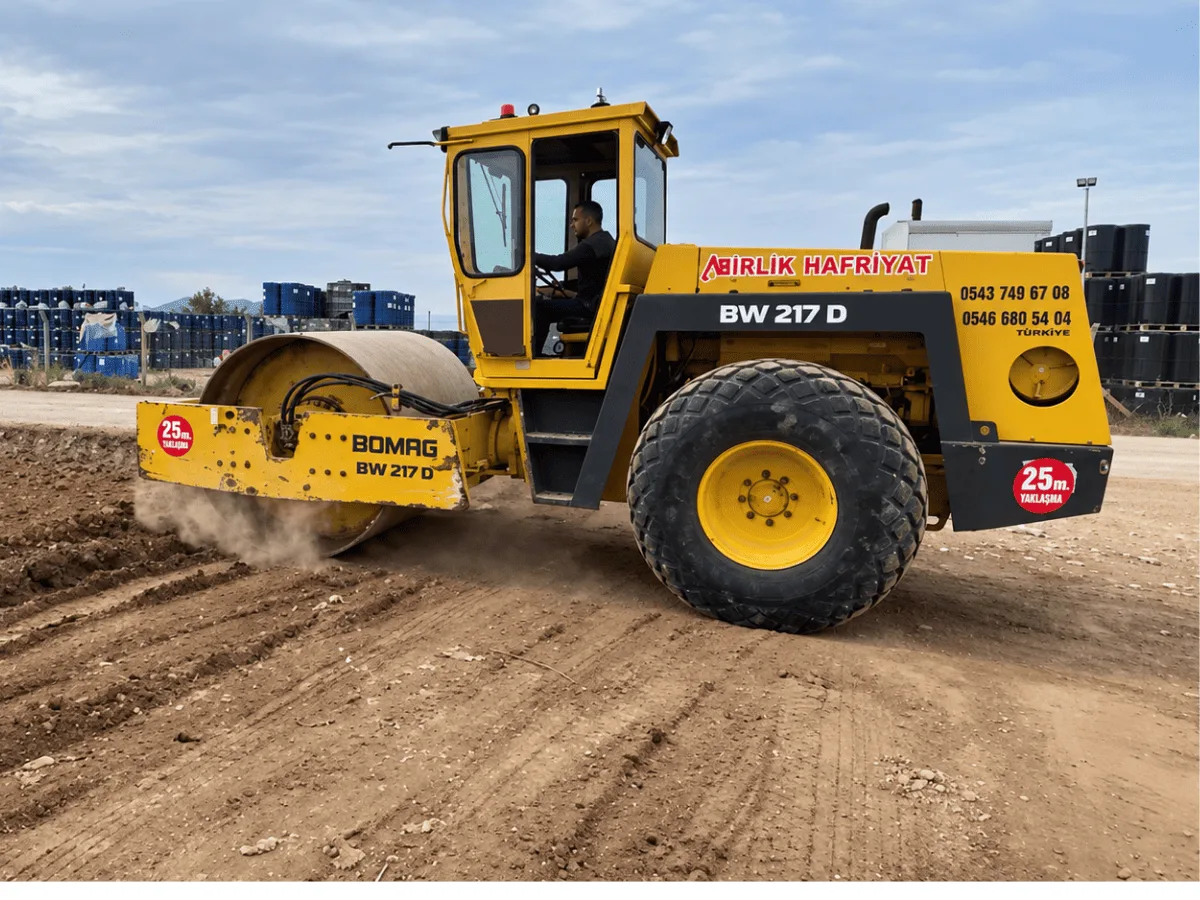
The appropriate use of road rollers and other compaction equipment supports controlled and efficient backfilling works.
Why Are Drainage and Water Control Important?
Evaluating surface water and groundwater conditions is essential in ground preparation and backfilling operations.
Uncontrolled water accumulation can negatively affect backfill material performance and make it difficult to achieve the required ground conditions.
Therefore, road construction, industrial facilities, and infrastructure projects require suitable surface slopes, effective water discharge, and properly planned drainage solutions.
Drainage systems must be designed according to ground characteristics and engineering requirements.
Construction Machinery Used in Ground Preparation
Construction machinery used in ground preparation and backfilling is selected according to project size and operational requirements.
Crawler Excavators: Used for ground excavation, removal of unsuitable materials, and site preparation.
Wheel Loaders: Used for loading backfill materials and transporting them within construction sites.
Motor Graders: Used for spreading backfill materials, surface grading, and establishing required ground slopes.
Road Rollers: Used for compacting backfill and graded aggregate layers.
Dump Trucks: Used for transporting backfill, crushed stone aggregates, and other materials to construction sites.
Coordinated use of construction machinery contributes to efficient and systematic project operations.
Professional Ground Preparation and Backfilling Services in Karaman
At Birlik Excavation, we provide ground preparation, excavation, backfilling, grading, and site development services for residential, industrial, commercial, and infrastructure projects in Karaman.
With our extensive machinery fleet and experienced team, we develop professional solutions by evaluating site conditions and specific project requirements.
Contact us for information and a quotation tailored to your ground preparation and backfilling project requirements in Karaman.